Debunking Five Myths About Electric Vehicle Fleets
May 1, 2023 | 6 min read
Share
Many companies want to add electric vehicles (EVs) to their fleets, but some fleet managers are worried.
A survey of 1,250 fleet decision-makers found that most—including those eager to add EVs—see charging infrastructure and driver training as big potential headaches.1060 Many worry about battery efficiency and durability. Some fear their vehicles will get stranded when they run out of juice.
The good news: experience should help minimize these concerns. Let’s consider each issue:
While every business has different charging needs, there are many ways to keep EV fleets charged.
Even when drivers are charging at home, fleet managers can remotely manage battery/cabin preconditioning, charging schedules and billing through Ford Pro software. This way, drivers don’t have to pay for charging work vehicles from a residence.
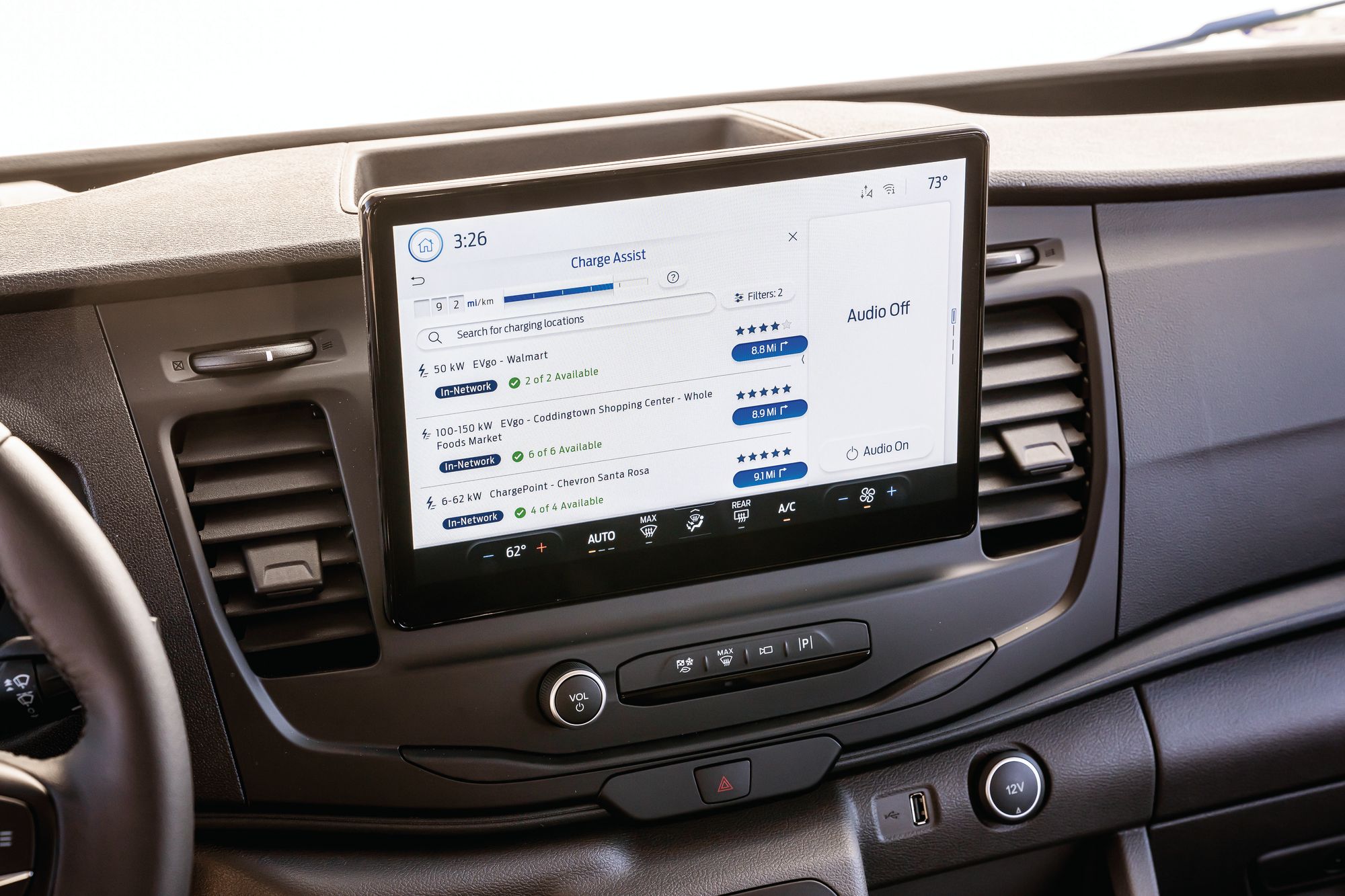
In addition, Ford Pro EVs offer Charge Assist, an in-vehicle app that helps fleet EV drivers find nearby chargers and automatically bills charges back to the fleet. In order to access Charge Assist, fleet managers must set up a free account on Ford Pro Public Charge Management via the Ford Pro Marketplace. Drivers can then locate, access and bill for charging while on the road from within the app. Drivers can also search for in-network and out-of-network chargers along the route, see real-time charger availability and filter specifically for DC fast chargers.
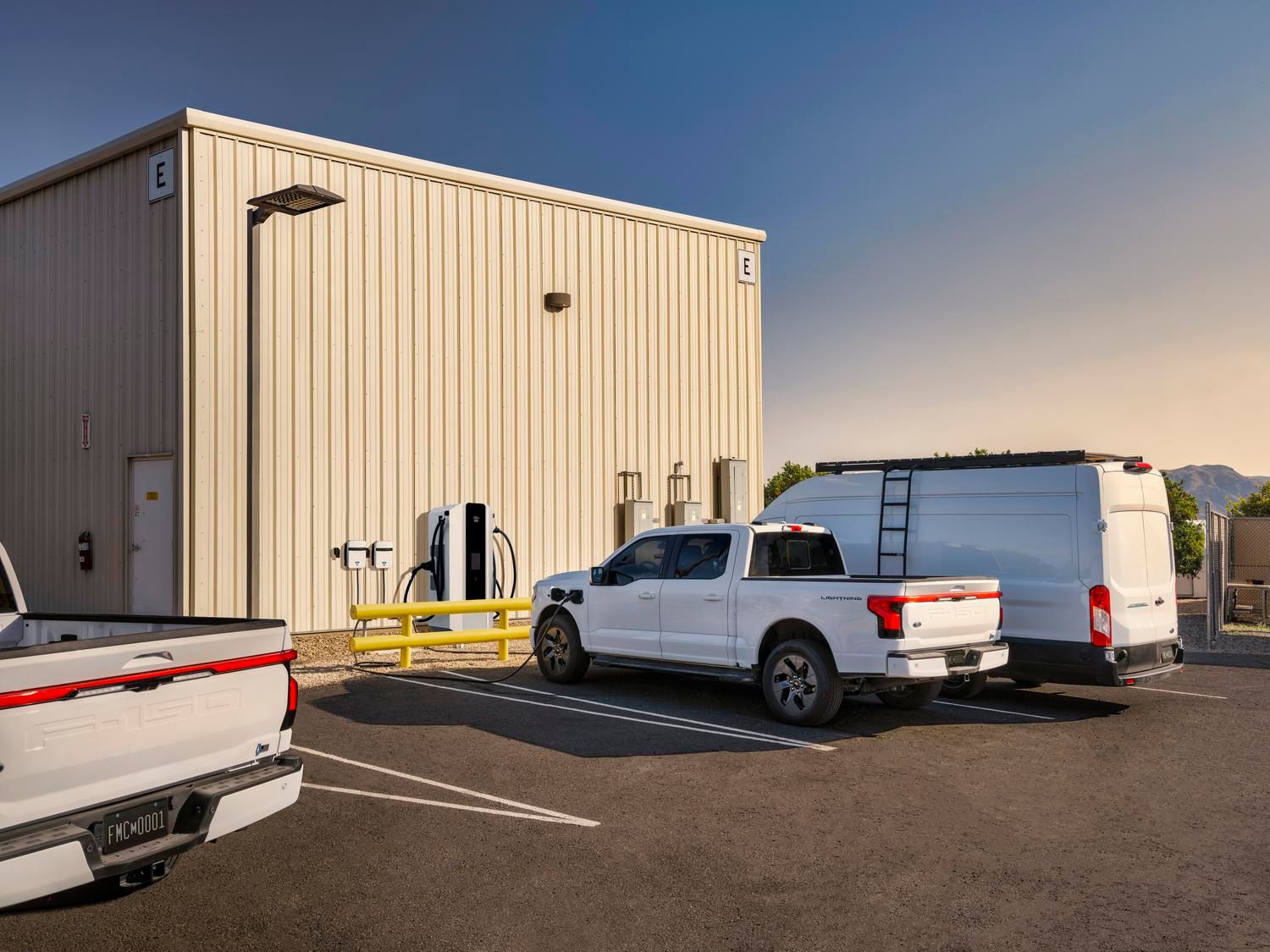
While every business has different charging needs, there are many ways to keep EVs charged.
There are many things fleet managers can do to help keep EVs charged throughout workday operations.
Finally, EVs can accommodate most businesses’ average daily travel needs. Sixty-nine percent of U.S. fleet operators report that their average vehicle travels less than 100 miles daily—and 91% say they travel less than 125 miles daily.1060 That is far less than the federal government’s estimate that the average all-electric vehicle range was 260 miles in 2020.1065
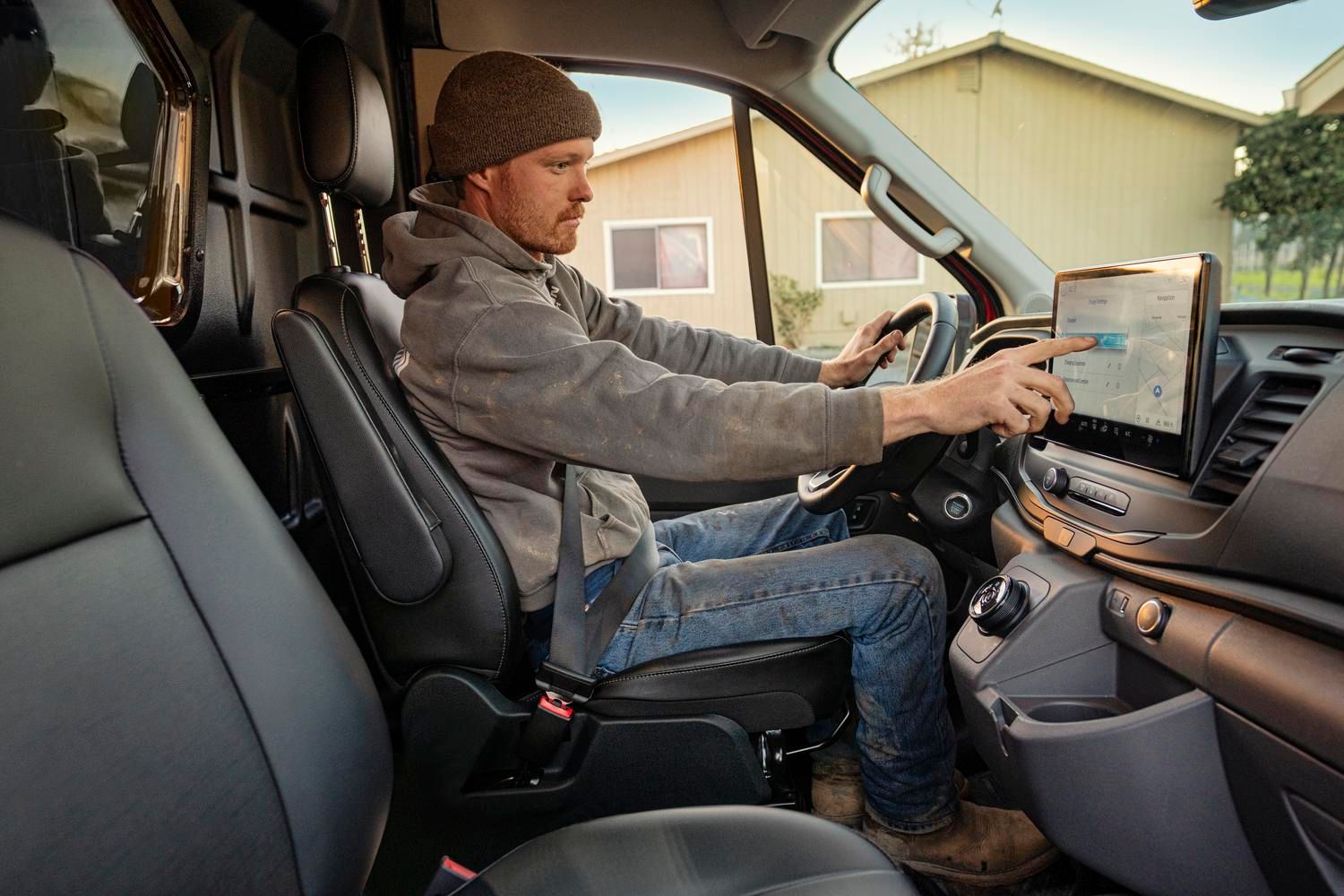
A driver dashboard alerts drivers when it’s time to recharge, identifies the closest charging station and provides directions.
The federal government reports that operating costs are usually lower for EVs than similar conventional vehicles.1066 In addition to skipping the gas pump, drivers of all-electric vehicles can potentially have lower scheduled maintenance costs.283
The purchase price of an EV can be higher, but government and utility company incentives can help offset the higher cost. For example, the federal government offers a tax credit capped at $7,500 on purchasing a new EV,1067 and state and utility incentives1068 are available in different areas.
Ford offers customers peace of mind with an eight-year/100,000-mile warranty on its EVs’ battery systems.1069
While the propulsion system might be different in an EV, they still need tire rotations, brakes, windshield wipers, light bulbs and other non-engine-related types of standard maintenance. However, federal analysis shows EVs typically require less maintenance than conventional vehicles because the battery, motor and associated electronics require little to no regular maintenance; there are fewer fluids, such as engine oil, that require regular maintenance; and there are fewer moving parts relative to a conventional gasoline engine.1065
While some fleet managers may have concerns about the transition to EVs, many others have already started the shift. Gathering information and learning is the best way to evaluate adding EVs to your fleet.
Learn more about how you can keep your electric fleet charged.
"Ford Pro™ Fleet Manager Global Quantitative Study: Perceptions of Electric Vehicles January 2022." This quantitative study was fielded in the United States, United Kingdom and Germany among 1,250 corporate fleet decision-makers. The survey was conducted online in December 2021. PSB was hired by Ford Pro to conduct the survey. Results are not weighted.
Charge time based on manufacturer computer engineering simulations. The charging rate decreases as battery reaches full capacity. Your results may vary based on peak charging times and battery state of charge.
“Charging Plug-in Electric Vehicles at Home.” U.S. Department of Energy: Alternative Fuels Data Center. https://afdc.energy.gov/fuels/electricity_charging_home.html
“Electric Vehicle Charging Station Locations.” U.S. Department of Energy: Alternative Fuels Data Center. https://afdc.energy.gov/fuels/electricity_locations.html - /find/nearest?fuel=ELEC&country=US&ev_levels=all
Based on original equipment manufacturers (OEM)/automotive manufacturers that sell all-electric vehicles and have active charging networks. Department of Energy data as of April 7, 2022, used. Numbers subject to change. The Ford app, compatible with select smartphone platforms, is available via a download. Message and data rates may apply.
“President Biden, USDOT and USDOE Announce $5 Billion over Five Years for National EV Charging Network, Made Possible by Bipartisan Infrastructure Law.” U.S. Department of Transportation: Federal Highway Administration. 2022. https://highways.dot.gov/newsroom/president-biden-usdot-and-usdoe-announce-5-billion-over-five-years-national-ev-charging
Eligible vehicles receive a complimentary three-year trial of E-Telematics services that begins on the new vehicle warranty start date. Requires modem activation. Terms and conditions apply. Telematics service and features, and access to vehicle data, depend on compatible AT&T network availability. Evolving technology/cellular networks/vehicle capability may limit functionality and prevent operation of connected features. After the three-year trial, annual service contract is required for E-Telematics service. Call 833-811-3673 to activate E-Telematics service.
“At a Glance: Electric Vehicles.” U.S. Department of Energy: Office of Energy Efficiency & Renewable Energy. 2021. https://afdc.energy.gov/files/u/publication/electric-drive_vehicles.pdf
“Electric Vehicle Benefits and Considerations.” U.S. Department of Energy: Alternative Fuels Data Center. https://afdc.energy.gov/fuels/electricity_benefits.html
Scheduled maintenance costs based on recommended service schedule as published in the Owner’s Manual. Analysis reflects Ford Motor Company’s standard method for calculating scheduled maintenance cost, and reflects data available in 2022.
“Inflation Reduction Act of 2022.” U.S. Department of Energy: Alternative Fuels Data Center. https://afdc.energy.gov/laws/inflation-reduction-act
“State Laws and Incentives.” U.S. Department of Energy: Alternative Fuels Data Center. https://afdc.energy.gov/laws/state
“What Is the Ford Warranty on Hybrid and Electric Vehicles?” Ford. https://www.ford.com/support/how-tos/search/What is the warranty on hybrid and electric vehicles/